
Identify signals
Teams selected current trends, tensions and emerging changes that could shape the years ahead.
Activity 03 · Imagination
International teams transformed research into contrasting stories about where present-day choices might lead.
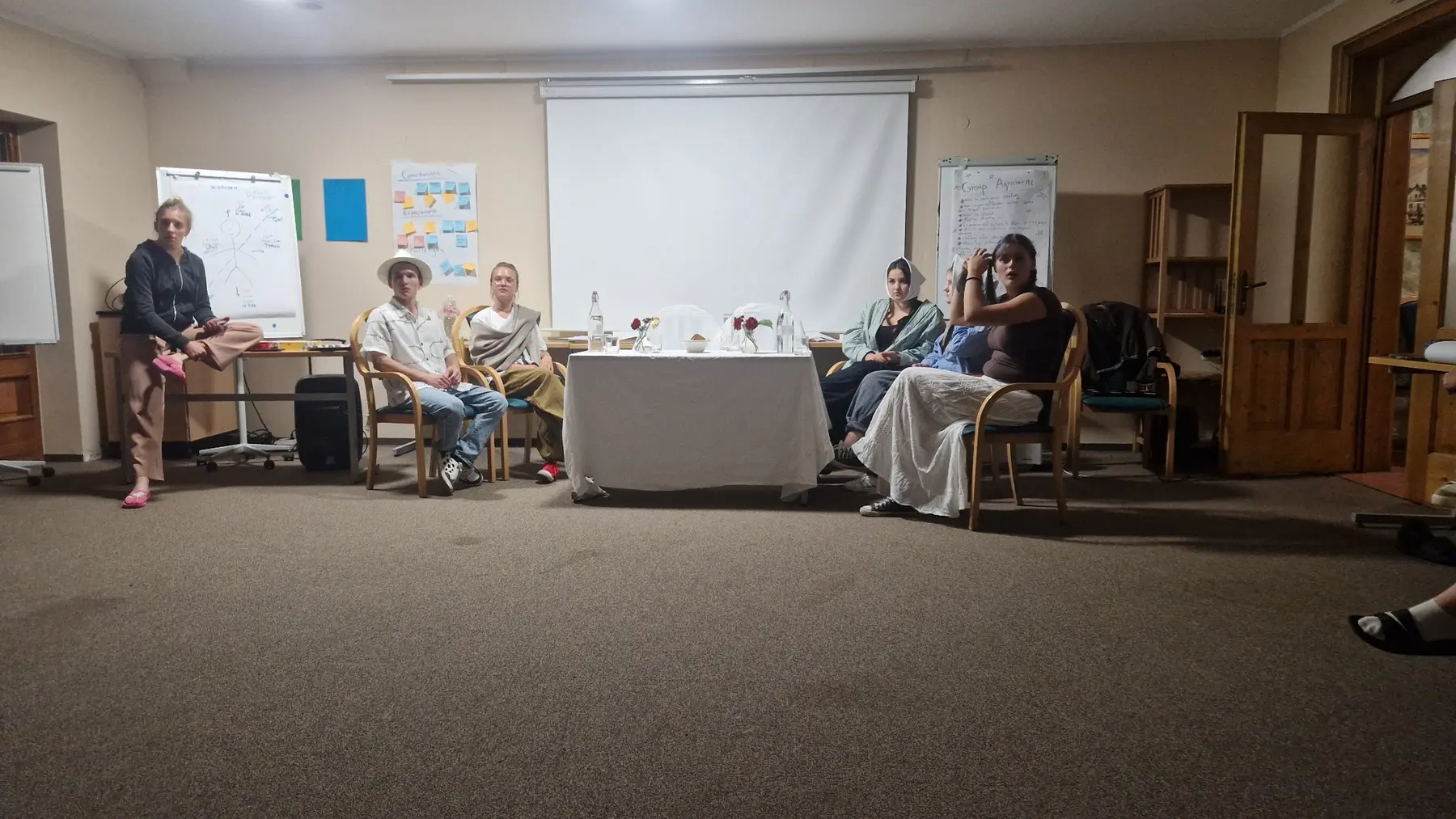
Scenarios made complex systems visible and discussable. By building several possible futures—not only one ideal vision—participants tested assumptions, recognised trade-offs and saw how individual, community and political decisions interact.
Teams selected current trends, tensions and emerging changes that could shape the years ahead.
They identified moments where action, delay or uneven responsibility could change the direction.
Each team developed coherent social, environmental and economic conditions for its scenario.
Scenarios were shared, questioned and revised through feedback from the wider group.