
Mapping the challenge
Small groups identified visible symptoms, underlying causes and groups affected by each issue.
Activity 02 · Understanding
Participants unpacked the environmental, social and economic systems behind the futures they wanted to discuss.
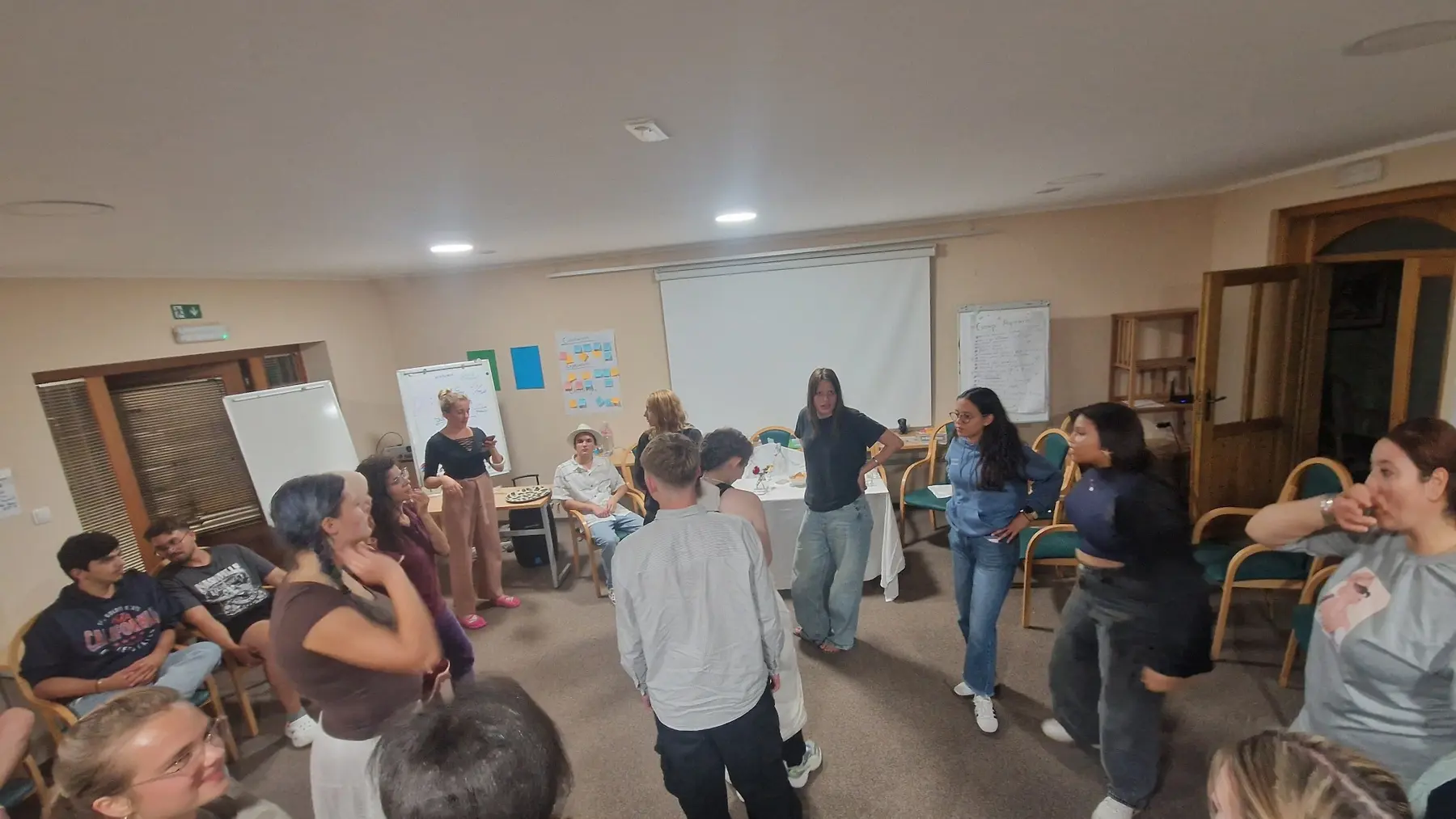
The aim was to move beyond slogans. Young people compared information, connected global trends with lived experience and examined how climate change, inequality, mobility, consumption and circularity affect one another.
Small groups identified visible symptoms, underlying causes and groups affected by each issue.
Concrete examples helped participants compare different responses and their unintended consequences.
Participants represented different interests and practised building arguments, negotiating and listening.
The group linked personal choices with community structures, public policy and global cooperation.